| |
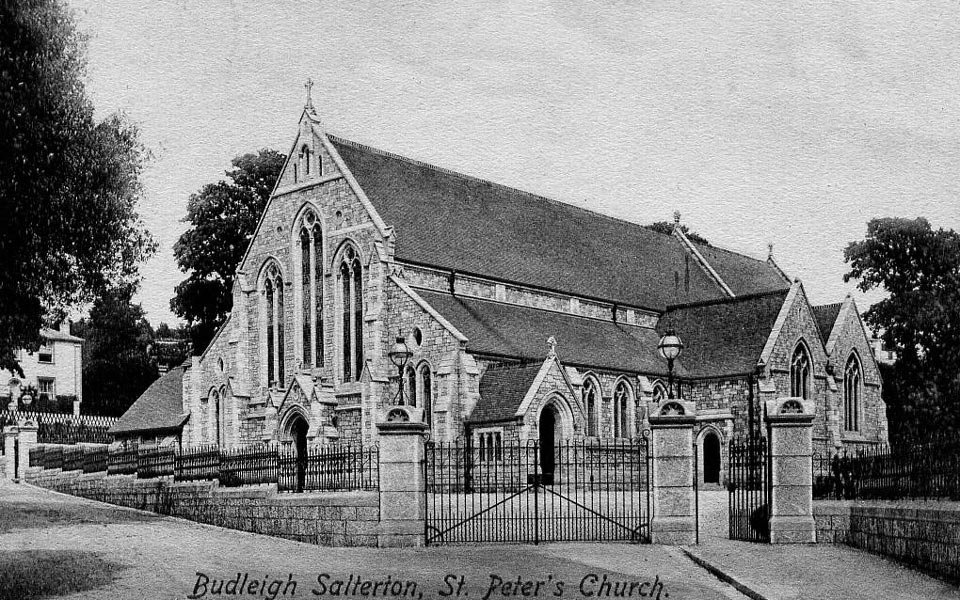
Mr George H. Fellowes Prynne, F.R.I.B.A., has designed a stately and
beautiful building, worthy to rank among the finest modern churches in the
country, and his plans have been satisfactorily carried out by the builders,
Messrs. Luscombe & Son, Exeter. The design is of Early English type, and the
plan of the church is in the main cruciform, having a nave of five bays, ninety
feet long by twenty-seven feet broad, north and south aisles, and transepts… The
tower and spire, which will reach a height of 140 feet are not yet erected. The
interior aspect of the church is extremely dignified, the fine chancel - forty
feet long - and the width of the nave, being especially so. An apsidal-ended
chapel is placed on the south side of the chancel, and an organ chamber,
gallery, and capacious vestries on the north side. The base of the tower forms a
baptistry at the west end of the north aisle… Externally, with its red tiled
roofs, Devon limestone and marble facings, and the dressings of Doulting stone,
the appearance of the building, as it stands out from a back-ground of green
trees, is extremely picturesque. It will look even better when the lofty tower
and spire are erected… (Church in the West 29 April 1893) As with so
many of Fellowes Prynne’s planned towers and spires, Budleigh Salterton’s was
never built. The article goes on to describe the lavish magnificence of the
richly vested altar, backed by the dossal hangings and side wings of
embroidered cloth, contributing to the impressive appearance of this fine
interior… This result is largely assisted by the costly and handsome fittings
with which the new church has been supplied. The building itself was the
gift of Mark Rolle. Various generous gifts were bestowed, including
…the beautiful chancel screen of Beer stone and marble…the pulpit with its base
of sandstone surmounted by exquisite wrought iron and polished brass work…
There are one or two unusual features to be seen here. One is the use of
clustered pillars, in stone and dark marble; another is the use of red pointing
in the grey stone. Both features give additional colour to the building. Further
colour is given by the series of pictures portraying the Stations of the Cross.
These are to be seen in panels around the sanctuary. There was also a series of
memorial windows, designed by Prynne, but regrettably most of these have been
destroyed.
The first postcard (franked in 1908) shows the exterior of the church.

Another vintage postcard, sent 3 December 1908, shows
the interior of the church not long after it was built.

An example of one of the “handsome fittings” is the pulpit, illustrated.
 |