| |
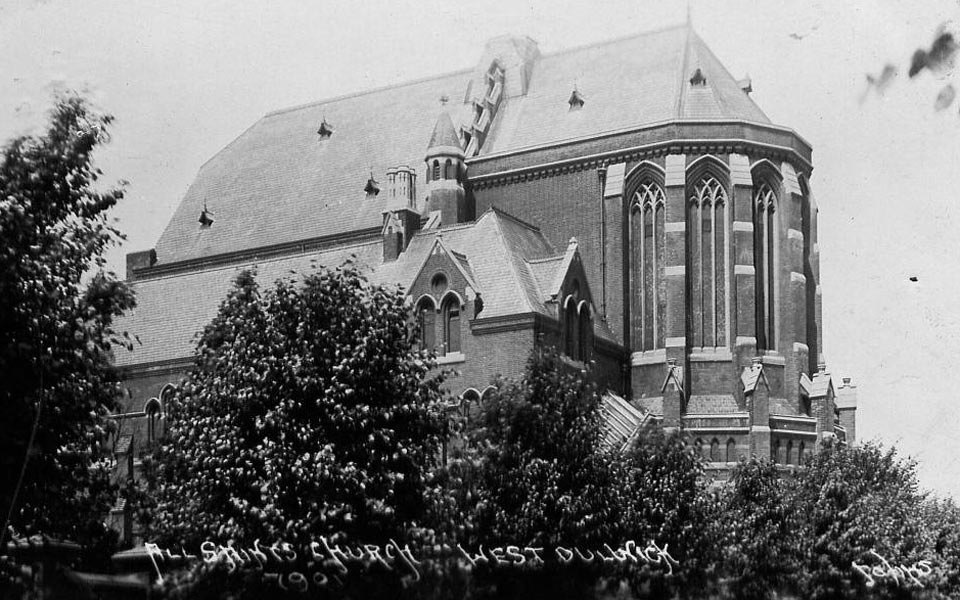
Fellowes Prynne was responsible for the design of all but the chancel, which
was by James Neale. This had been added in 1891 to the much simpler chapel of
1836/7, and indeed Neale was commissioned to draw up plans to rebuild the rest
of the church. However, this rebuild did not take place until Fellowes Prynne
was asked to produce plans. There is a drawing in the church, seemingly in
Fellowes Prynne’s hand, showing that the tower was intended to have a spire. The
plans also showed a stone screen of the kind seen at Staines or Taplow. Fellowes
Prynne retained the basis of the 1891 chancel, but the remainder of the design
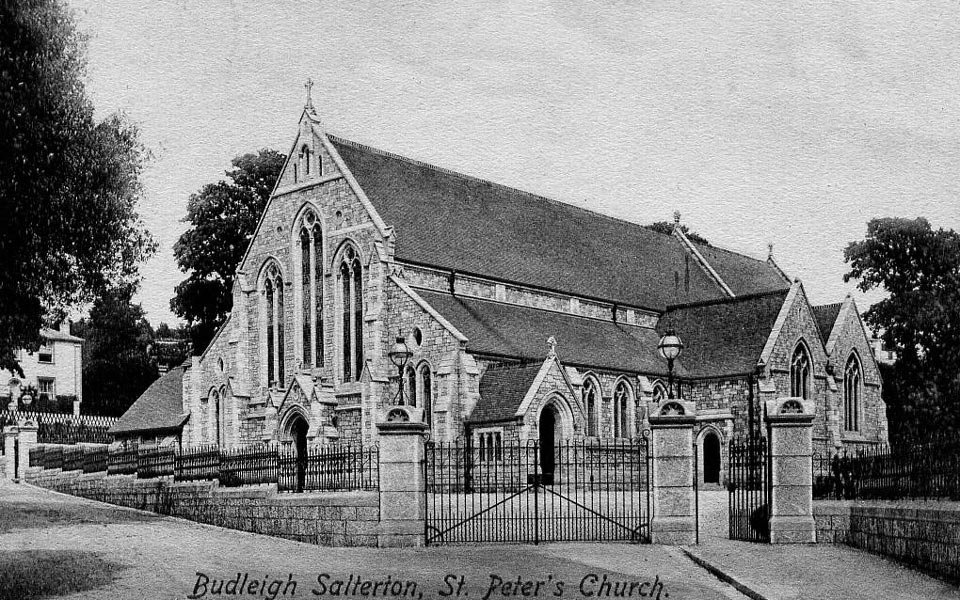
is his. Externally, the building is stone faced. There is the usual
steeply-pitched tiled roof, but, unlike all churches designed solely by him,
there is a change of level at the chancel. The gable ends of the transepts and
the rounded roofs of the chapel and baptistery provide variety and interest, and
the balance is completed by the ornate tower, despite the fact that it is
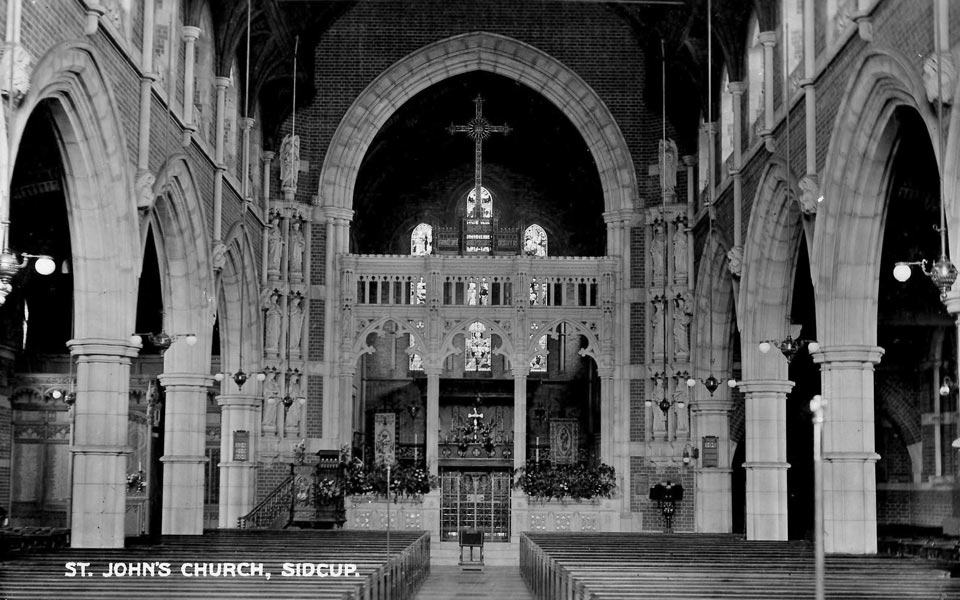
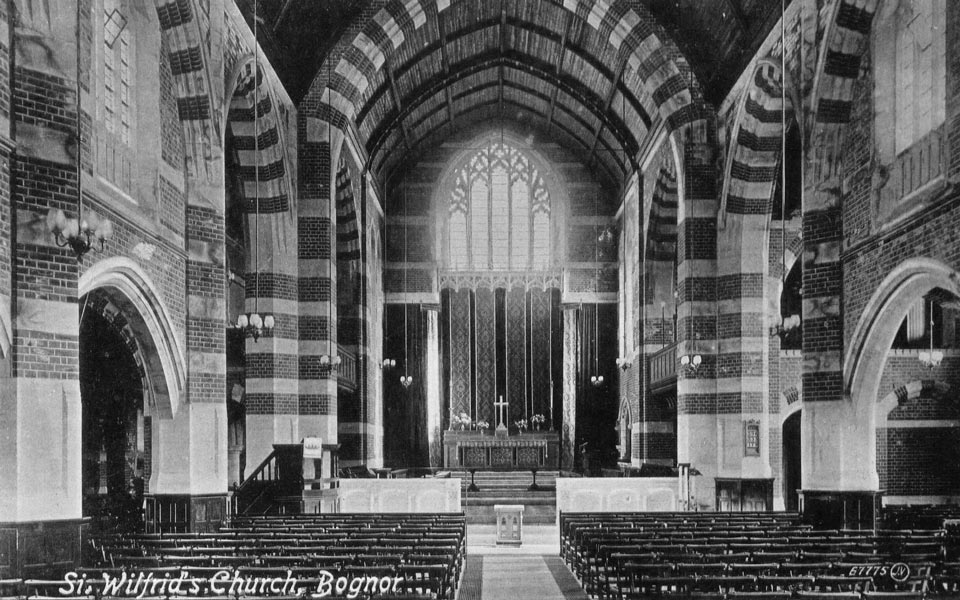
missing its planned spire. The interior attains the height and scale common to
all Fellowes Prynne’s large churches, with high arches, and no clerestory as
such, but instead a level of small quatrefoil windows. Between each arch,
leading up to each quatrefoil, is a slender twisted pillar, set upon an angel
corbel. Such pillars have been seen at other locations but not with the
barley-twist feature, although this can be seen on main pillars at Ilfracombe
and St. Michael, Beaconsfield. At Bushey Heath, the main pillars, which are not
as massive as are frequently seen in Fellowes Prynne’s churches, feature concave
faceting (only seen elsewhere at St. Nicolas, Taplow) and bands of leafy
decoration just below the capital - again rare. The chancel contains wooden
screens and an organ case which appear to be to Fellowes Prynne’s design; the
sanctuary has little of his work. There is a Lady - or morning - chapel, which
was designed by Fellowes Prynne but not built until after the First World War.
It is in his usual apsidal form, and houses the War memorial. It has come to be
known as the St. George’s chapel. The windows in the apse of the chapel are
crafted by Bacon, whose company Fellowes Prynne used almost exclusively for his
stained glass work. There is an apsidal baptistery at the west end, with ribbed
ceiling resembling the night sky. Engineers Kinnell & Co were responsible for
the installation of the heating. The first postcard illustrated, showing the
exterior of the church, was sent in 1935. The second
postcard puts the church in context with everyday life – in this case a
London Transport Greenline AEC RF bus!
 |